

Chinese Dance, Ballet or Contemporary: Which Class Is Right for You?
3 July 2026
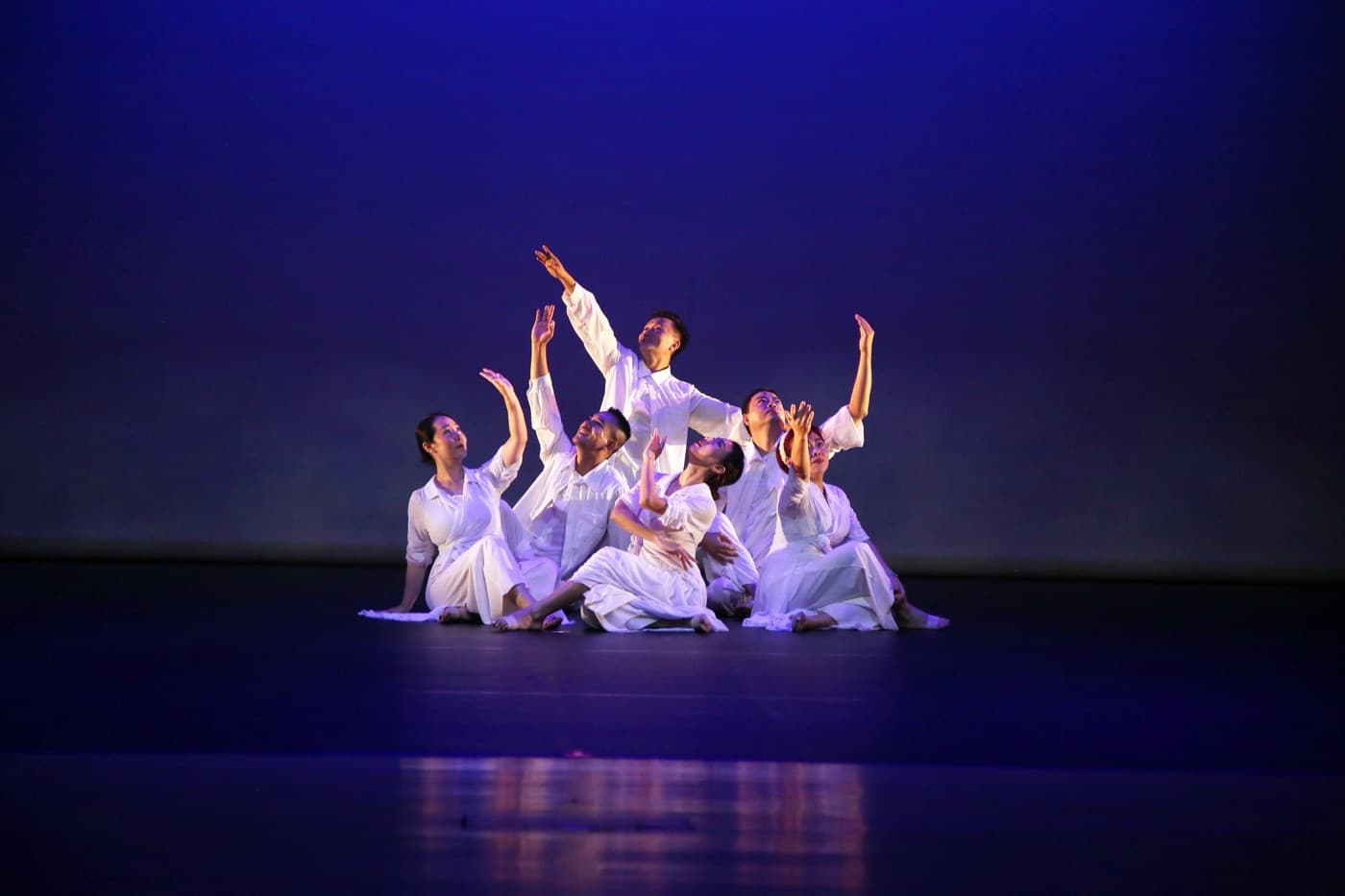
There is a particular kind of longing that follows some people around for years. You see a dancer — on a stage, in a film, at the edge of a wedding dance floor — and something in your chest leans forward. I'd love to do that. And then the thought that always comes next: but I wouldn't know where to begin. So you file the wish away, again, and promise yourself: someday.
If that is you, here is the first thing worth knowing. The obstacle was never your body, your age, or some talent you were born without. Nine times out of ten, the thing standing between an adult and their first dance class is quieter than any of that. You simply don't know which door to walk through.
Chinese dance, ballet, contemporary — to a beginner they can look like three different countries, each with its own language, its own rules, its own unspoken dress code. Choosing feels high-stakes, as if picking wrong will cost you the whole dream. It won't. What follows is an honest guide to how each of these styles actually feels from the inside — not the brochure version — so you can choose the one that suits the person you already are. And permission, granted in advance, to try more than one.
First, a myth worth dropping
Before we open any doors, let's clear away the belief that stops most people right on the doorstep: that you are too old, too stiff, or simply "not a dancer."
At YUE, that belief is contradicted every single week. The studio is built for adults — working professionals unwinding after a long day, complete beginners who have never taken a class, and returning dancers picking up a thread they set down a decade or two ago. This is not a room of prodigies who happen to let a few grown-ups in. Adults are the room.
And the flexibility, the fitness, the "long line" you imagine you would need first? None of it is an entrance requirement. Those are what the practice gives you, gradually, in exchange for showing up — you do not stretch in order to earn dance; you dance, and the stretch arrives. If "I'm too stiff" is the loudest voice in your head, our FAQ answers it plainly, and the first hour on the floor answers it more plainly still.
The first door: Chinese dance, expression rooted in culture
Push open the first door and you find not one room but a whole wing. "Chinese dance" (华族舞) is an umbrella, and it helps to know its two great branches before you step in.
Classical dance (古典舞) draws on centuries of court and theatrical tradition. Its signature is a quality called 身韵 — the articulation of breath, torso, wrist and gaze into a single flowing line. It looks serene from the outside; inside, it is quietly demanding, all curved spirals and inner stillness. Folk and ethnic dance (民族舞) is its vivid cousin: the regional dances of China's many peoples, warm, rhythmic and full of character — a Tibetan lilt in the knees, the bright turning wrists of a Dai water dance.
What unites them is that the movement is breath-led and expressive. You are not merely executing shapes; you are telling something. For that reason Chinese dance rewards, and builds, a particular set of gifts: upright posture, a strong quiet core, and an unusual articulacy in the hands and wrists that carries over into everything else you do. It is also a tradition that arts and cultural bodies increasingly treat as living heritage worth passing on, not a museum piece.
This door suits you if you are drawn to heritage and storytelling, if grace appeals to you more than force, if you want your body to say something rather than simply move. And there is a real horizon on the other side of it. YUE's dancers have carried these forms to genuine stages — the Chingay Parade (later featured in the Straits Times and shared by PM Lee Hsien Loong), a Best Live Performance Award at River Hong Bao, a Gold Award at the Singapore Golden Lion Cup. You begin in a beginner's class; the tradition, if you want it, leads somewhere.
You would be in serious hands. Classical dance at YUE is led by Angel Peng, a Shenyang Music Conservatory graduate with over a decade between classroom and stage; the broader Chinese dance programme is guided by Artistic Director Daniel Deng Yu and Chang Hsiao-Min, lead choreographer for the People's Association Talents Chinese Dance Ensemble; and folk dance by Bai Ying Wen of the Beijing Dance Academy's folk department.
The second door: ballet, the architecture of line
Ballet is the most structured room of the three, and for many adults that is precisely its comfort. A class has a shape you can lean on: you begin at the barre, one hand resting on the rail, drilling the small foundational movements; then you move to the centre and let them go, unsupported. The vocabulary is French and, yes, initially bewildering — plié, tendu, relevé — but the structure beneath it is reassuring. There is a clear path, and you can feel yourself walking it.
The rewards are famously good posture. Ballet trains alignment, turnout, balance and a deep, unshowy core strength, and it is where the coveted "long line" gets built. It is also low-impact — strength and control without pounding the joints, which health bodies often cite as a reason it ages so well. The small wins compound: the day your balance holds half a second longer, the week the terminology stops being noise and starts being instruction.
Be warned, honestly: the first classes can be humbling. Muscles you did not know you had will introduce themselves the next morning. But at YUE the pace is set for adults, not for a company audition. This door suits the detail-oriented, anyone who loves visible progress, those chasing better posture, and returning dancers who want to rebuild their fundamentals cleanly. Adult Ballet here is taught by Shen Zhihua, who trained at the Shanghai Dance School and has spent decades teaching adult beginners with a firmness that never loses its warmth.
The third door: contemporary, freedom and release
The third room feels different the moment you enter, because there is no barre to hold and, often, no fixed vocabulary to memorise. Contemporary dance moves with the body rather than imposing shapes on it — floorwork, momentum, the swing and suspension of a movement following its own weight, sometimes improvisation where you are invited to find the next moment yourself. Depending on your temperament, that openness lands as either exhilarating freedom or slightly unnerving space. Both reactions are normal.
Physically it is wonderfully complete. Contemporary asks the whole body to move in every direction, building mobility, the strength of getting down to the floor and back up again, and — the part desk-bound professionals feel most — a way to release the tension that a day of sitting packs into the shoulders and spine. Many students describe the class as somewhere to put down what they walked in carrying.
The learning curve is gentler on rules and steeper on something else: it asks you to be comfortable with ambiguity and with expressing yourself, which can feel more exposing than any single step. This door suits creative personalities, anyone looking for an emotional outlet, and stress-carriers who would rather move a hard week out of the body than talk about it. Contemporary Dance at YUE is led by Artistic Director Daniel Deng Yu, a former principal dancer who studied under the modern-dance master Cao Chengyuan at the Beijing Dance Academy, and who teaches through a patient, progressive method built around finding your own language of movement.
At a glance
You have now stood in all three doorways. Here is the same feeling, gathered into one place — useful once you have imagined each room, not a substitute for it.
| Style | Feel of a first class | Top body benefit | Learning curve | Best if you're the type who… |
|---|---|---|---|---|
| Chinese dance | Expressive, breath-led, story-driven | Posture, core, articulate hands and wrists | Gentle entry; a deep tradition to grow into | Is drawn to heritage, storytelling and grace |
| Ballet | Structured, calm, barre-to-centre | Alignment, balance, low-impact strength | Steep vocabulary, but a clear, reassuring path | Loves detail, discipline and visible progress |
| Contemporary | Free, grounded, floorwork and momentum | Full-body mobility and tension release | Gentle on rules; asks comfort with expression | Wants an emotional outlet and room to explore |
How to choose: three honest questions
If you still feel torn, set the styles aside for a moment and ask yourself three things instead.
- What pulls you? When you pictured yourself dancing at the start of this piece, what was the feeling — the grace and story of heritage, the poise and clarity of structure, or the freedom to move exactly as you feel? Your instinctive answer is data.
- How do you feel about rules? Some people are freed by a clear framework and unsettled by a blank canvas; others are the reverse. Ballet offers the most scaffolding, contemporary the least, and Chinese dance a structured tradition with expressive room inside it.
- What do you want to walk out with? Better posture and a calmer spine? A pressure valve after long days? A craft and a culture to grow into over years? Different doors deliver different afternoons.
Here is the reassuring part: the questions matter less than they seem, because the rooms overlap. Every one of these styles will build strength, musicality, body awareness and, quietly, a community of people who start to expect you. And because life is busy, it helps to know the class schedule is built to fit around a working week. You are not locking in a decade. You are choosing where to start.
Honestly? Stop overthinking and try one
There is a quiet truth underneath all of this: the head is not the right organ for this decision. You can weigh feelings and benefits and learning curves for another three years — some people have — and still not know, because knowing lives in the body, and the body only speaks once it is moving.
So let it. The most useful thing you can do is walk into one class and pay attention to how you feel in it and, tellingly, on the way home. You do not have to marry the first style you try. Come back another week and sample a second. Adults do this all the time here; sampling is not indecision, it is how a real fit gets found. If you would like to hear how others landed on theirs, our students tell those stories in their own words in Voices.
Three doors, one room
Come back, finally, to the image we started with. Chinese dance, ballet, contemporary — they look like three separate destinations, but they are three doors into the same room. Whichever one you open, you arrive at the same place: a body moving with intention, a feeling given shape, and that old studio promise of finding the beauty in life through dance. The styles differ; the room does not. And the only genuinely wrong choice available to you is the one you have perhaps been making for years — standing in the corridor, and never walking through.
Not sure which door is yours? Try any class for $38, 1.5 hours, and let your body decide. Book a trial.
Come find the beauty in dance
Any class, $38 for a 1.5-hour session. Come see how it feels.
Book a Trial