

The 90-Minute Reset: How Dance Relieves Stress for Busy Professionals
22 May 2026
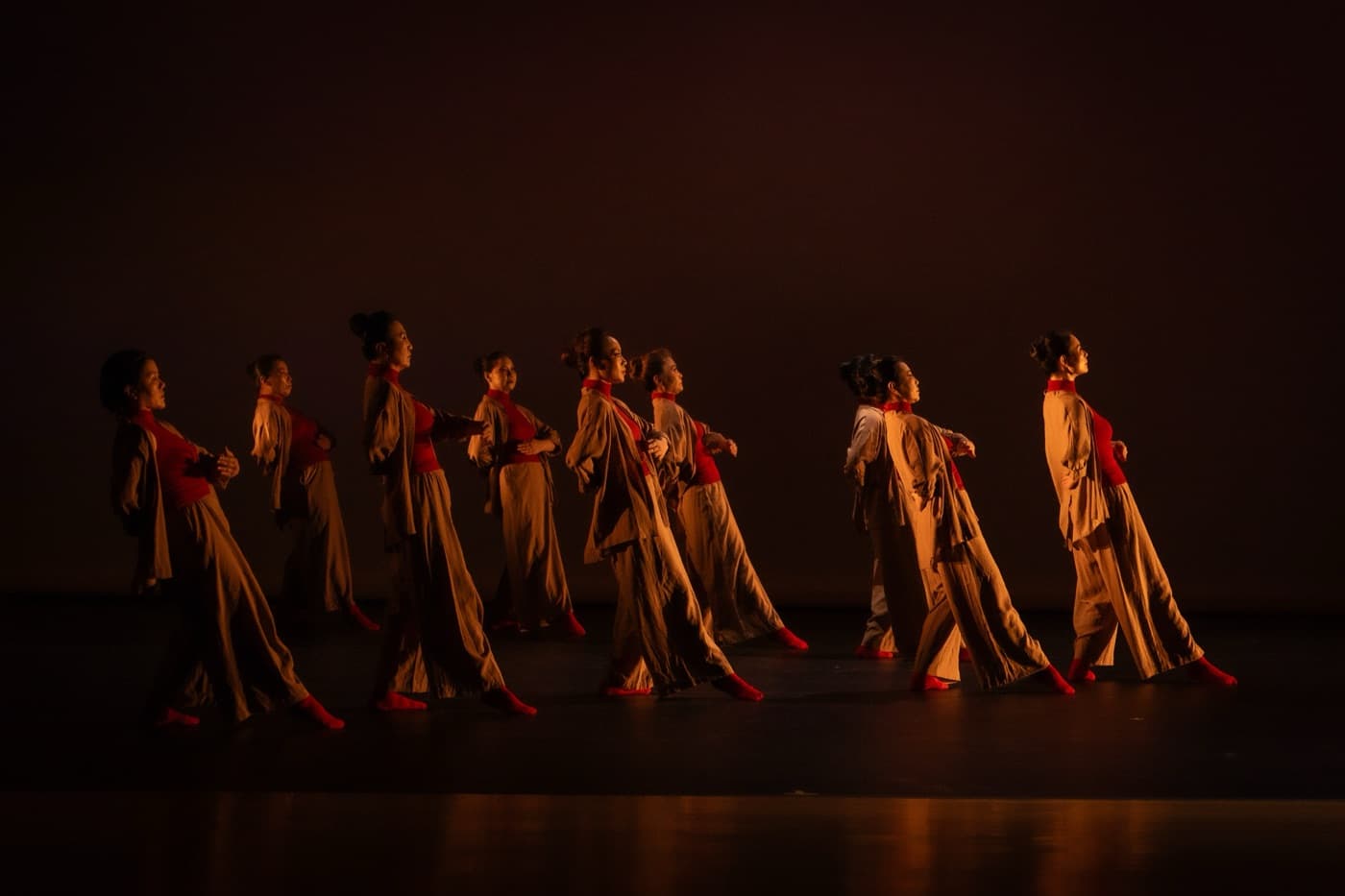
There is a particular kind of tiredness that has nothing to do with your body. It is a little after six. You have technically left the office, but the office has not quite left you — the last unanswered email is still composing itself somewhere behind your eyes. Your phone buzzes on the train home: a message, a reminder, a headline nobody asked for, and your thumb answers before your brain does. Your shoulders have been up near your ears since the afternoon, and they have quietly decided to stay there. This is the modern professional's version of rest — the work has stopped, but the mind never got the memo.
If that sounds familiar, you are in good company. For many of Singapore's working adults, the evening is not really free time. It is the overflow of the day: the place where everything that did not fit spills out. And the usual advice for stress does not help much. Unplug. Switch off. Breathe. Easy words — far harder when "switching off" means sitting alone with the exact thoughts that wore you thin in the first place. Stillness, it turns out, is not the same thing as calm. Sometimes the quieter the room, the louder the head becomes.
This is about a different way to set the day down. Not by doing less, but by doing something so absorbing that the noise has nowhere left to sit. For a growing number of professionals, that something is a dance class — and the reason it works has less to do with dance than you might think.
Ninety minutes the day cannot follow you into
Picture the alternative to scrolling on the sofa. You step into a studio. The lights are warm, the floor is sprung and quiet under your feet, and the first thing that happens is almost administrative: your phone goes into your bag, and it stays there. No notifications. No half-glances. For the next hour and a half, there is genuinely nothing you can do about your inbox, so your body finally stops bracing for it.
That small act — putting the phone down and knowing it will stay down — is where the reset begins. What follows is ninety minutes with a shape to them. A warm-up that asks your attention. A count you have to keep. A short phrase of movement to learn, repeat, and refine. None of it is dramatic. All of it is just demanding enough that there is no spare channel left running in the background for the day's worries. You are not trying to forget the office. You simply cannot think about it and find the next step at the same time — and the next step wins.
By the time the music starts, most people notice the same thing: the shoulders have come down. Nobody told them to. They just ran out of reasons to stay up.
How movement, focus, and music quiet the stressed mind
Stress has a way of looping. A worry surfaces, you turn it over, it hands you a new worry, and the whole thing tightens like a knot you keep pulling. What breaks the loop is rarely willpower — it is attention landing somewhere else with enough weight that the loop loses its grip. A dance class is built, almost by accident, to do exactly that, and it does it on three fronts at once.
- Focus. Learning a sequence occupies the same part of you that does the worrying. You cannot rehearse an argument with a colleague and remember where your arm goes on count five. The concentration is gentle but total, and it is a relief precisely because it is not about you.
- Movement. The tension you carry home is not only in your head; it settles into the neck, the jaw, the lower back. Moving through it — stretching long, turning, travelling across the floor — gives the body somewhere to send all that held energy. Physical activity has long been associated with lower stress and better mood, but you do not need a study to feel the difference between a body that has moved and one that has been folded into a chair all day.
- Music. Set movement to music and something shifts in how time passes. The counts give your mind a track to run on; the melody crowds out the mental chatter. An hour goes by and you could not say where it went.
Put the three together and the effect is more than the sum. You are absorbed, you are moving, and you are carried by sound — three doors closing on the noise at once. This is what people mean, in plain terms, when they talk about movement for stress relief: not a cure, not therapy, but a reliable way to interrupt the loop long enough for the tension to loosen on its own.
None of this is medical, and we would never pretend it replaces care you might need. It is simply what a good ninety minutes does to a wound-up mind.
A room that is not a screen
Part of what makes it work is where it happens. A dance class asks you to be somewhere fully — in a real room, with real people, learning something with your hands and feet instead of your thumbs. After a day spent almost entirely inside screens, that alone is a change of state.
Our studio sits at 47 Beach Road, a short walk from City Hall and Bugis — close enough to fold into the end of a working day rather than fight for a place in it. We have taught adults here since 2018, and the room is set up for exactly the person reading this: someone who arrives a little frayed and leaves a little more themselves. The pace is unhurried. The instructors are working artists who teach adults specifically, so nobody is expected to arrive knowing anything, and nobody is rushed. There is no competition in the room — only a group of grown-ups, each quietly absorbed in the same phrase of movement.
Given a slot in the week, a class becomes a ritual: the same evening, the same walk in, the same settling of the breath. And a ritual is a far sturdier thing than a good intention. It is easier to protect one fixed evening than to promise yourself, vaguely, that you will relax more.
You do not have to call yourself a dancer
Here is the quiet obstacle most people trip on: they assume a dance class is for dancers. It is not. Some of the calmest, most regular faces in our studio arrived convinced they had "no rhythm," two left feet, and no business being there. What they wanted was not a stage. It was one evening a week that belonged entirely to them.
You can find your own version of that in almost any style. The flowing lines and inner stillness of Chinese classical dance suit people who want something meditative. Ballet rewards those who like structure and precision. Contemporary gives room to move freely and let the day out. Folk dance is warm, sociable, and hard to feel tense inside of. You do not have to decide any of this in advance — you only have to pick one evening and turn up. If it helps to read it in other people's words first, our students describe the shift better than we can on our voices page, and you can see which evenings fit your week.
Whichever you choose, the reason to come is the same. Not to perform. Not to become anything. Just to put the day down for ninety minutes and pick it back up lighter.
The easiest way to feel it
You cannot really read your way into this. The drop in the shoulders, the quiet after the music, the surprise of an hour passing without a single thought about work — those only arrive once you are in the room.
That is what a trial is for. Any class, $38 for a single 1.5-hour session — ninety minutes, phone down, no commitment beyond showing up once. Come straight from the office, still in spreadsheet brain, and see what a real reset feels like. When you are ready, say hello and book a trial. The hardest part is walking in. Everything after that is just the day, finally, letting go.
Come find the beauty in dance
Any class, $38 for a 1.5-hour session. Come see how it feels.
Book a Trial