

Dance, Confidence, and Reinventing Yourself in Midlife
10 April 2026
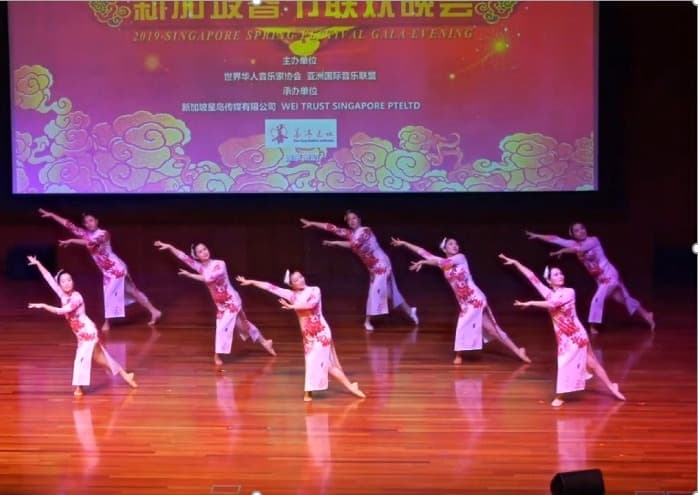
There is a particular quiet that arrives somewhere in the middle of a life. The urgent years have passed. The career is running on its own momentum, the household knows its routines, the people who once needed you constantly need you a little less. And into that quiet comes a question you may not have let yourself ask in a very long time. Not what needs doing next, but something smaller and far harder to say aloud: what about me?
If that question has been circling you lately, you are not having a crisis. You are paying attention. And one of the oldest, most human answers to it is also one of the least expected — to move. To dance.
The years you gave to everyone else
Most of us spend our thirties and forties being useful. We are good at our jobs, good to our families, good at holding the many small pieces of other people's days together. It is honest, worthy work. But usefulness has a quiet cost: somewhere along the way, the things we did for no reason at all — because they were beautiful, because they felt good, because we simply wanted to — get filed under "someday."
For a lot of adults, dance sits in exactly that folder. Maybe you loved it as a child and let it go. Maybe you never had the chance and always wondered. Either way, the wanting didn't disappear. It just waited, politely, behind everything more important.
Midlife is when the folder finally opens. Not because you have suddenly found free time, but because you have earned a different kind of permission — the permission to want something purely for yourself.
Dance in your 40s: coming back to a body you stopped noticing
By this stage, most of us relate to our bodies mainly through their complaints. A stiff shoulder. A back that objects to long meetings. A vague sense that we are carried around by something we no longer really live in.
Dance changes that relationship, and quickly. Not by demanding you be young again, but by asking you to pay attention. To notice where your weight sits, how your arm travels through space, what your spine does when you breathe. This is not the punishing self-improvement of a fitness regime. It is something gentler and more radical: you begin to inhabit yourself again.
Adults are often surprised at how much they can actually do. A body in its forties or fifties is not a lesser instrument — it is a more intelligent one. You follow direction better than a child. You understand what a movement is for, so you learn its intention faster even when the muscles take their time. This is why so much of Chinese classical dance, with its emphasis on flowing line and inner stillness, suits adult learners so well; it rewards patience and feeling over raw athleticism. You can read what draws people to it on our courses page.
The stiffness you are worried about is not a verdict. It is a starting point that softens week by week, the same way it does for everyone who walks in.
Dance for confidence: how presence is rebuilt, one eight-count at a time
Here is the part that catches people off guard. They come for the movement, and they leave with something they did not expect to find at this age — confidence.
It does not arrive as a lightning bolt. It is built in small, repeatable increments. You learn a short phrase that felt impossible last week and find your body simply knows it now. You hold a line a beat longer. You catch your own reflection mid-movement and, for once, do not flinch. Each of these is a tiny piece of evidence that you are still someone who can learn, grow, and surprise yourself. After years of doing what you already know how to do, that evidence is quietly revolutionary.
And it does not stay in the studio. The changes are physical first — dance draws the shoulders back and the sternum up, and posture is simply confidence made visible. You start standing differently in a lift, sitting differently at a table. But the deeper shift is in bearing. People who dance carry a certain ease and presence into the rest of their lives — into the meeting room, the difficult conversation, the ordinary Tuesday. Not performance. Presence: the feeling of being at home in your own skin, which is the one thing you cannot fake and everyone can sense.
This is not a promise printed on a brochure. It is what our adult students describe, in their own words, over on our voices page.
Doing something for joy, not productivity
We have been trained, most of us, to justify our time. Everything must be for something — for the résumé, for the health metrics, for the children, for the future. Somewhere in that logic, joy became suspect, an indulgence to be earned rather than a reason on its own.
Dance quietly refuses that bargain.
For ninety minutes, there is nothing to optimise. Your phone is in your bag. The inbox does not exist. There is only the music, the count, the mirror, and the plain physical pleasure of moving in time with other people. You are not being productive, and that is precisely the point. You are allowed to do a thing simply because it makes you feel alive.
Adults often report that the studio becomes the one hour of the week that fully empties their mind — better than the gym, better than the wind-down that never quite winds down. It is not that dance solves your problems. It is that, for a while, you set them down, and you almost always pick them back up lighter. The studio runs classes across evenings and weekends for exactly this reason; you can look at what fits your week on the schedule.
"It's not too late" — a truer version of a tired phrase
You have heard it's never too late so many times it has stopped meaning anything. So let us say it more honestly.
It was never a real deadline. The deadline belongs to people building professional careers on a stage, where the body's earliest years matter enormously. That was never your project. Your project is to feel more like yourself, and there is no age at which that stops being possible — in fact, there is an argument that midlife is the ideal time to begin. You bring a focus, a self-knowledge, and an appreciation for artistry that no fourteen-year-old possesses. You are not behind. You are arriving exactly when you have the most to bring.
YUE Dance Studio was built for precisely this. Since 2018, on Beach Road near City Hall and Bugis, it has been an adult school — complete beginners, working professionals, and returning dancers who last took class decades ago. The teachers are not children's instructors making room for grown-ups; they specialise in adult learners, and they teach at the pace real adults need. Our adult ballet, for instance, is designed openly for beginners and returners, focused on posture and line rather than turning anyone into a prima ballerina. You can meet the people who would teach you on the instructors page, and see the stages our community has grown into — from Chingay to River Hong Bao — on the performances page.
Our teachers like to put it simply: find the beauty in life through dance.
Start now, while the wanting is fresh
The question you started with — what about me? — does not need a grand answer. It needs a small, true one. An hour. A room with a mirror and some music. A first eight-count that feels clumsy and then, one day sooner than you think, does not.
You do not have to commit to anything. You do not need experience, the right body, or a plan. You just have to be curious enough to walk in once. Any class at the studio can be tried for $38 for a single 1.5-hour session — beginner ballet, Chinese classical, folk, contemporary, whichever quietly calls to you.
The reinvention you have been sensing does not begin with a decision to become a new person. It begins with giving the person you already are one hour that is entirely her own. When you are ready, say hello and book a trial. The music is waiting, and so are you.
Come find the beauty in dance
Any class, $38 for a 1.5-hour session. Come see how it feels.
Book a Trial