

Dance vs the Gym: A Gentler Route to Strength and Flexibility
15 May 2026
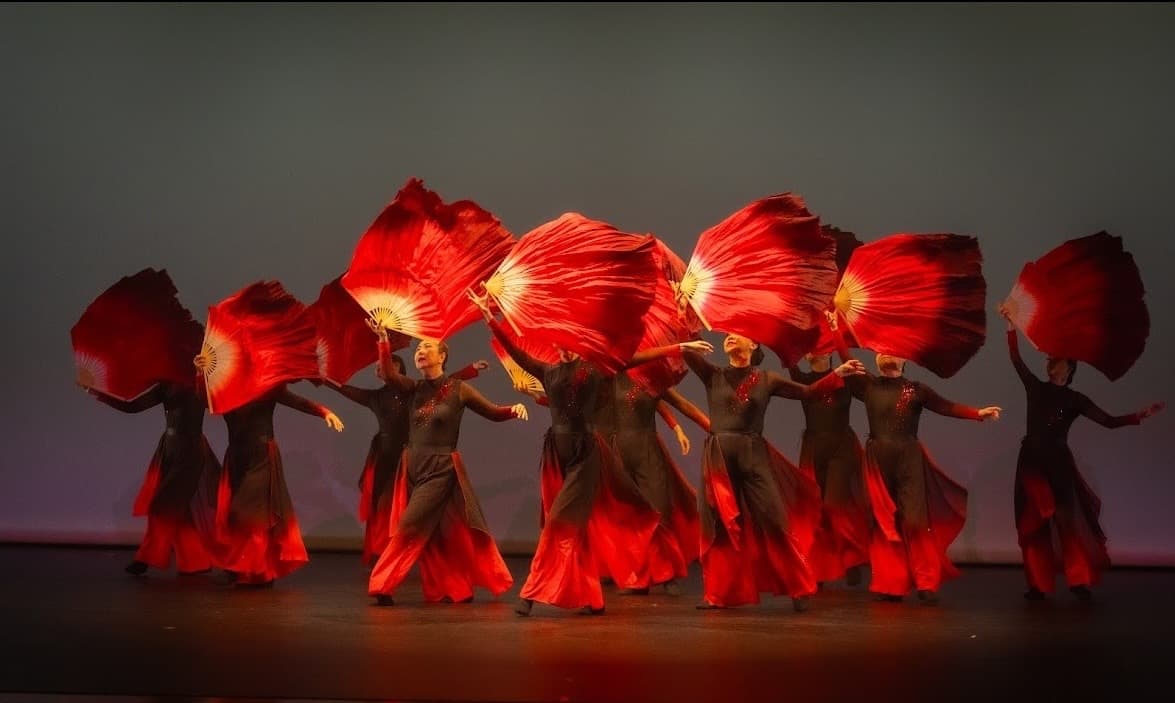
Somewhere in your wallet — or buried three screens deep in a banking app — there is a gym membership you are quietly still paying for. You signed up in a burst of good intention: a new year, a round-number birthday, a photo that made you wince. For a fortnight or so you went. Then came a late meeting, a wet evening, and a body that ached in a way that felt more like punishment than progress. The treadmill turned into something you dreaded, and dread is a hopeless foundation for a habit. So you stopped going. The monthly deduction, politely, did not.
If you recognise yourself in that story, you are in enormous company. Most adults who feel they "should exercise" are not lazy, and they are not short on willpower. They have simply been trying to sustain a kind of movement they never once looked forward to. This is a piece about a gentler way in — and, to be fair to the gym, about the things it still does better.
Is dance actually good exercise? Yes — genuinely
Let us deal with the honest question first, because it is the one that keeps sensible adults from booking: is dance real exercise, or just a pleasant way to pass an hour?
It is real exercise. A dance class asks your body to do most of the things a good fitness routine is built around — only folded into music and phrasing rather than sets and reps:
- Strength. Holding a line, controlling a slow descent, rising onto the balls of your feet, carrying your own weight through a turn — this is resistance training, using the most convenient weight in the room: you. Ballet-based and classical work in particular build deep postural and core strength, the unglamorous kind that quietly improves how you sit at a desk all day.
- Flexibility. Every class opens with a structured warm-up and works range gradually, week by week. You do not need to arrive flexible; flexibility is something dance grows in you, safely, over time.
- Cardio. A lively folk number or an up-tempo contemporary phrase will find your heart rate without ever announcing itself as "cardio." You are chasing the music, not a number on a machine.
- Balance and coordination. This is where dance genuinely outpaces most gym routines. Shifting weight, spotting a turn, moving different limbs on different counts — you are training the nervous system, not only the muscles. It is the kind of capacity that matters more, not less, as the decades pass.
None of this asks you to be young, slim, or coordinated on day one. It asks you to keep showing up — which is the whole of the matter.
The thing the gym could never give you
Here is the quiet truth behind every abandoned membership: the best exercise is the one you keep doing. A perfectly optimised workout you dread is worth less than an imperfect one you look forward to all week.
Dance is built to be looked forward to.
It is expressive. You are not counting down reps until you are allowed to leave. You are learning to say something with your body — a turn of the wrist, a lift of the chin, the held breath before a phrase resolves. The hour has an inside to it. You finish class having made something, not merely burned something.
It is musical. Movement set to music borrows the music's momentum. The count carries you; each phrase pulls you into the next. Effort that would feel like a grind on a rowing machine becomes almost invisible when it is riding a melody.
It is social. You learn alongside the same faces each week — other working adults, other beginners, people who were also nervous their first time. A studio has a warmth that a wall of mirrors and a pair of headphones never quite manages. On the evening you least feel like coming, it is often the people, not the exercise, that get you through the door. Our students' own words put this better than we can.
Expression, music, company — these are not soft extras bolted onto the fitness. For most adults, they are the mechanism. They are what converts a good intention into a standing appointment you actually protect.
Being fair to the gym
Dance is not the answer to every goal, and it would be dishonest to pretend otherwise. There are things a gym simply does better.
| What you're after | Where it wins |
|---|---|
| Maximal, progressive heavy strength | The gym — barbells and machines load far beyond bodyweight |
| Isolating one muscle or chasing a metric | The gym — targeted, measurable, repeatable |
| Training at 6am or 11pm, any day you like | The gym — fully flexible, solo timing |
| Sticking with it for the long haul | Dance — you look forward to it |
| Balance, coordination, posture, grace | Dance — trained as one integrated whole |
| Expression, music, community | Dance — built in, not bolted on |
If your goal is a heavy deadlift or a bodybuilder's frame, a barbell will get you there and a dance class will not. And if your schedule is genuinely chaotic, the gym's round-the-clock, show-up-alone flexibility is a real advantage; a class runs on a timetable. The most honest answer, for many adults, is that the two are not rivals at all — a weekly class you love and the occasional strength session can live happily side by side.
But if the question underneath "which should I do?" is really which one will I still be doing in a year — that is a different question, and dance tends to win it.
Movement you don't have to force
There is a particular relief in exercise that does not run on gritted teeth. You are not overriding your body's reluctance every single evening. You are going somewhere to learn something, in good company, to music you like — and the fitness arrives quietly, as a by-product of the pleasure.
That is what makes it sustainable. Consistency is not a personality trait you either possess or lack; it is mostly a question of whether the thing is worth returning to. Make the movement genuinely enjoyable and "discipline" stops being the problem it always seemed to be. Over months, the strength and flexibility accumulate anyway — you simply notice them the way you notice a stair that no longer leaves you breathless, rather than as a target you had to grind toward.
"But I've never danced in my life"
Almost no one who walks into an adult beginner class has. YUE is an adult studio — our students are working professionals, complete beginners, and returning dancers who last took a class decades ago. Nobody is watching you; everyone is watching the teacher and minding their own count. Our instructors teach to the room in front of them and adjust to real adult bodies — the tight hips, the desk-rounded shoulders, the "I can't touch my toes" that nearly everyone starts with.
You also do not have to commit to a lifestyle to find out whether you like it. Start with a single style and see how it sits. If you are unsure which, our guide to the classes — Chinese dance, ballet, contemporary, folk, and classical — is a good place to browse, and the schedule shows what runs when at our studio on Beach Road, a short walk from City Hall and Bugis.
Come try one class
You already know the gym-membership approach: pay up front, promise yourself you will change, quietly stop. Try the opposite. Come to one class — any style — and simply notice whether, at the end, you feel like you have been exercising, or whether you feel like you have been dancing. For most people it is unmistakably the second, which is exactly why they come back the following week.
Any class is $38 for a 1.5-hour session — no membership, no lock-in, nothing to abandon. Bring the stiffness and the rustiness; that is precisely what a first class is for. Get in touch and we will help you choose a class to begin with.
Come find the beauty in dance
Any class, $38 for a 1.5-hour session. Come see how it feels.
Book a Trial