

Rediscovering Self-Expression as a Working Adult
3 April 2026
You did not decide to become measured. It happened the way most important things happen to adults — gradually, invisibly, one sensible choice at a time. You learned to keep your voice even in meetings. You learned to soften an opinion until it was safe to say aloud, to answer "How are you?" with "Busy — but good," to let the interesting, unruly thoughts pass unspoken because there was rarely time or reason to voice them. None of this was wrong. Being professional, measured, and practical is a genuine skill, and the working world — in Singapore as anywhere — pays for it in salary and respect.
But it asks for something in return, and the price is quiet enough that most of us never notice we have paid it. Somewhere under the competence, your capacity for self-expression — the part of you that used to feel things out loud, that laughed too hard, moved too freely, took up space without apologising — learns to sit still. You can go years without missing it. And then one ordinary evening, catching your own reflection in a darkened train window on the way home, you feel the smallness of it: a whole self, folded neatly and put away.
The child who moved without asking
There was a version of you that danced in the kitchen. Not well — that was never the point. You spun until the room tilted, invented shapes for songs you only half understood, flung your arms wide because the music seemed to ask for it and no one had yet taught you to be embarrassed. Children move the way they breathe: as a direct extension of what they feel. Joy goes straight to the limbs. So do frustration, and wonder, and the particular restlessness of a good song.
Then, somewhere along the way, feeling learned to stay indoors. We are taught — gently, and for understandable reasons — that visible emotion is something to manage, that composure is maturity, that moving your body for the sheer pleasure of it is for children, or for the stage, or for other, freer people. By adulthood most of us have quietly agreed to the terms. We confuse being expressive with being on display, and having decided we do not want to be watched, we stop moving altogether.
A language for what words cannot hold
Here is the thing that spreadsheets and status updates cannot do: they cannot hold a feeling that has no vocabulary. There is a kind of grief that is not quite sadness, a kind of longing with no object, a joy too large for the word "happy." You have felt these. Everyone has. And you have almost certainly had the experience of reaching for words to describe one of them and coming up with nothing that fits.
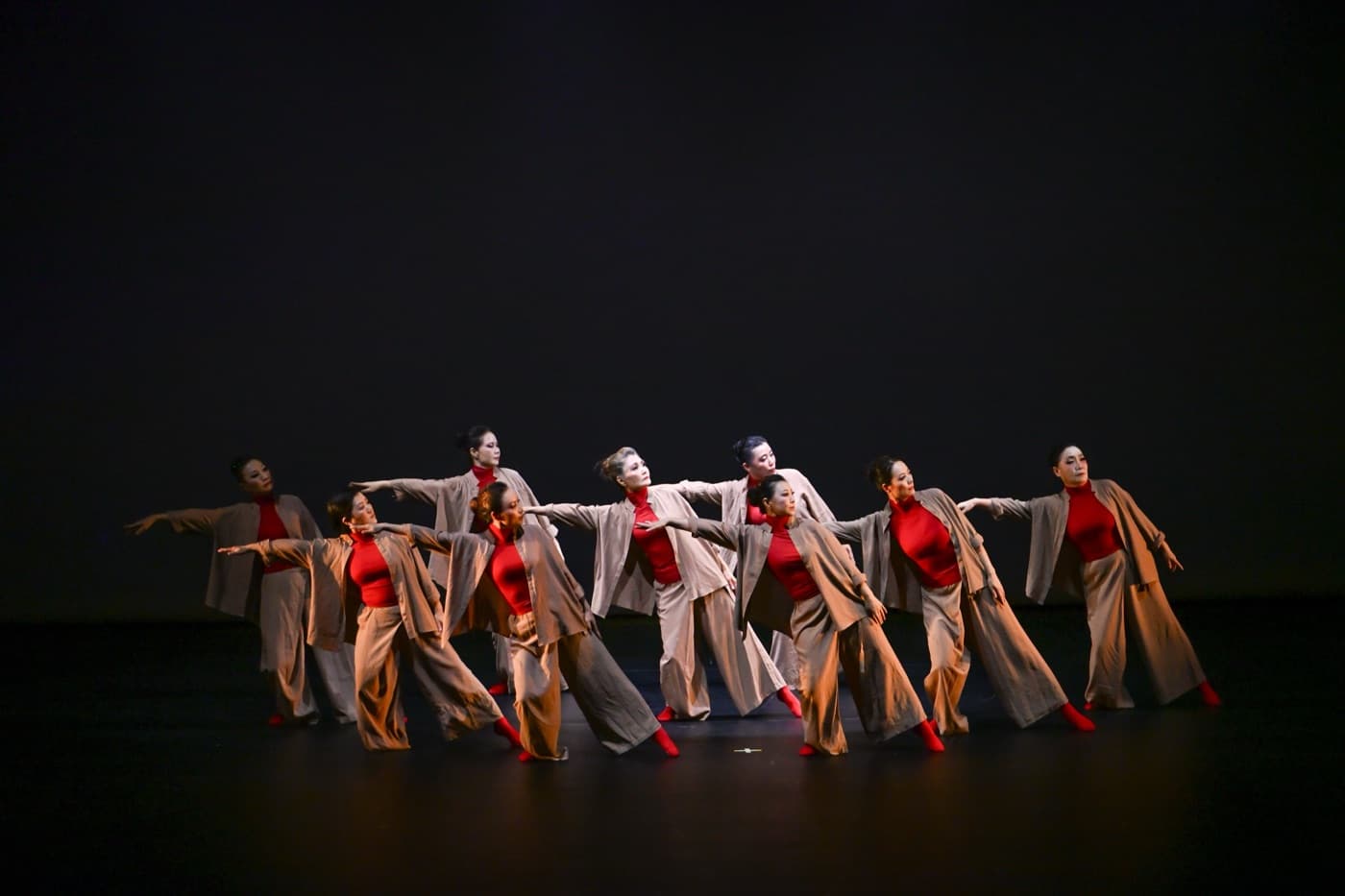
Dance is older than that problem. Long before anyone wrote anything down, people moved to mark what mattered — to grieve, to celebrate, to pray, to belong. That older language is still in you, unlearned but not lost. In Chinese classical dance, a single unbroken line of the arm can carry a whole story of restraint and release; the folk traditions turn shared joy into something you can see; contemporary work, as we describe it in our own studio, explores "movement, space, and emotion with freedom and intention." None of this is performance for an audience. It is a way of saying the thing you cannot email — to yourself, first of all.
And it does not require fluency. You do not translate a feeling into steps the way you draft a report. The steps are simply where the feeling is allowed to go — and the body, it turns out, remembers how to speak this language far sooner than the mind expects it to. The first time a movement carries something real, most people are surprised it happened at all, and a little surprised at what came out.
This is what people mean, without quite having the words for it, when they go looking for a creative outlet for adults. It is not really about acquiring a hobby. It is about finding somewhere to put everything the working day has no room for.
Permission to be more than a job title
Walk into a studio on a weekday evening and one of the first things you notice is what you are not. You are not your inbox. You are not the number you hit or missed this quarter. For ninety minutes, no one in the room needs anything from the version of you that answers to a title. That absence is startling at first, and then it is the best part.
Our Artistic Director, Daniel Deng Yu, talks about leading students to "explore the body's potential and find their own language of expression" — and his own motto is simpler still: dance out the style of your life; move to the rhythm of your soul. That is not a marketing line to him; it is a description of what the work is for. Learning to move expressively is, in the most practical sense, a granting of permission. Permission to be more than useful. Permission to take up space. Permission to let a feeling reach your hands before you have decided whether it is appropriate.
You do not need talent for this, and you do not need a history. Our instructors spend their days with adults who last danced decades ago, or never at all — accountants, engineers, nurses, parents, people who arrive convinced they have left it too late. What they teach is not only technique but permission, patiently, one class at a time.
The self-expression that was there all along
The release, when it comes, is physical before it is anything else. Somewhere in the warm-up your shoulders drop from around your ears, where the desk had parked them. Your breath goes lower and slower. A phrase of movement that felt impossible at the top of the hour suddenly arrives on its own, and you realise you were not thinking about work, or your phone, or yourself, for whole minutes at a stretch — a quiet you had almost forgotten was available.
And then there is the surprise that catches nearly everyone off guard. You still have it. The expressive self you assumed was gone for good turns out to have been waiting, patiently, the whole time — not lost, only unpractised. Adults describe it in oddly consistent ways: I felt like myself again. I did not know how much I had missed this. I cried a little in the car afterwards and I am not sure why. You can read some of these accounts in our students' voices. What they are describing is not a new identity. It is an old one, restored.
This is the real reward of dance for self-expression — larger than fitness, though you will likely feel stronger and more supple too. It is the steady return of a fuller version of yourself: someone who feels things on purpose again, who moves through the world with a little more of the aliveness that professional life had quietly filed away. It is what draws so many working adults across Singapore back to expressive movement on a studio floor, long after they thought that part of them had closed for good.
An invitation
If any of this has landed somewhere true, treat that as information worth acting on. You do not need to commit to a transformation, or announce anything, or be any good. You only need to give the quieter part of yourself one evening to see what it does with the space.
Come and try a single class — any style, $38 for a 1.5-hour session — at our studio on Beach Road. Explore the courses and find the one that calls to you, whether that is the poised lines of Chinese classical dance, the warmth of folk, the openness of contemporary, or the clean elegance of ballet; then, whenever you feel ready, get in touch. Bring the self you fold away every morning. This is a room built for letting it back out.
Come find the beauty in dance
Any class, $38 for a 1.5-hour session. Come see how it feels.
Book a Trial