

Finding Your People: The Social Side of an Adult Dance Studio
27 March 2026
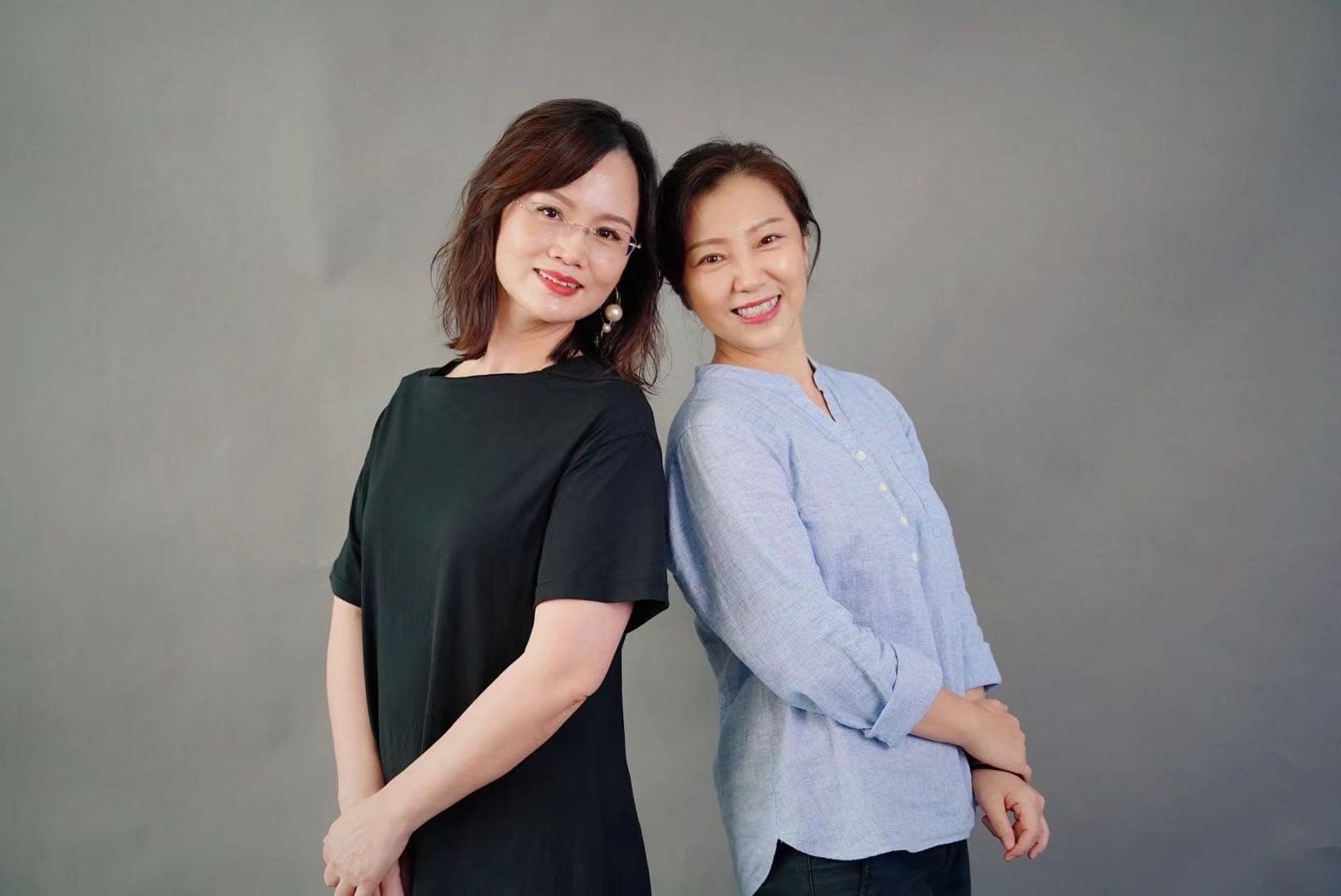
There is a particular quiet that settles over adult life somewhere in your late twenties or thirties. You have a job, a commute, a home, a phone crowded with contacts — and yet, if you are honest with yourself, you cannot quite remember the last time you made a genuinely new friend. Not a colleague you are pleasant to in the lift. Not an acquaintance whose posts you like. A real friend: someone who notices when you go missing for a week, who knows the small running details of your life. In school there was an endless supply of them, people moving through the same days at the same time. As a working adult in Singapore, that supply quietly runs out. No one warns you. It simply happens, one unmet year at a time.
If any of that lands, you are not doing life wrong. You are experiencing something structural — and, quietly, something a lot of adults around you are feeling too.
The friendships we quietly stop making
Making friends as an adult is genuinely hard, and it is hard for reasons that have almost nothing to do with your personality. Researchers who study how friendships form tend to point to a few conditions that make closeness likely: proximity, repeated and unplanned contact, and a shared setting relaxed enough to let people drop their guard. Think about school, university, national service — every one of them delivered all three by default. You did not decide to befriend the people beside you. You simply kept ending up next to them until, one day, they were yours.
Adult life dismantles those conditions almost perfectly. Work gives you proximity without much depth — you are colleagues, which is not the same as friends. Group chats and social feeds give you contact without presence. And the older you get, the more every social plan has to be scheduled, negotiated against everyone's calendars, and defended against the sheer gravity of going home to rest. Spontaneity, the soil that friendship actually grows in, becomes a luxury.
So the problem was never you. It is that adulthood removed the settings where friendship used to happen on its own. Which means the real question is not how do I try harder to connect? It is where do I go?
The case for a third place
The sociologist Ray Oldenburg gave those settings a name: the third place — the ground that is neither home (the first place) nor work (the second). Historically, third places were the coffee house, the barber shop, the neighbourhood tea stall; in Singapore, the void deck, the kopitiam, the community club. They share a texture: informal, unhurried, a little repetitive in the best way. You become a regular. People know your face before they know your story. And it is precisely there — not at engineered "networking" events — that community tends to form.
Most modern life has quietly stripped these places out. Deliveries replace the market run; streaming replaces the cinema crowd; the office went partly remote. The third places we inherited are thinning, and very little has arrived to replace them. This is a large part of why so many capable, sociable adults feel unexpectedly alone.
A dance studio, it turns out, makes an unusually good third place. Regular hours. The same faces, week after week. A shared setting with a shared purpose, and nobody there to sell you anything but the pleasure of moving. Among the social hobbies for adults in Singapore, dance has a quiet advantage most people overlook: the connection is a by-product of the doing, so it never feels forced.
Why the barre makes better friends than the bar
Here is the honest obstacle to making friends as an adult: small talk. It is the toll most of us dread paying — the weather, the job, the polite excavation for common ground, all of it performed while both people privately hope the other one carries the conversation. Bars, mixers, "let's grab coffee sometime" — they hand you a stranger and an empty silence and ask you to build a friendship out of nothing.
A dance studio removes the toll entirely, because you are never facing each other across an empty table. You are facing the same mirror, working the same infuriating turn, chasing the same eight counts of a phrase that refuses to sit in your body. There is nothing to manufacture. The shared struggle is right there in the room with you.
And struggle, as it happens, is a wonderful glue. You catch someone's eye in the mirror at the exact moment you both get the combination wrong, and you laugh — a real laugh, not a polite one. Someone a term ahead of you leans over and shows you where your weight is supposed to sit. You spot the person who was as stiff as you were three months ago now moving with an ease that makes you believe your own body might get there. None of this requires a single interesting thing to be said. You are bonding sideways, over the work, which is the way adults actually bond best.
Community without the small talk
What grows out of that is a specific, unshowy kind of belonging. It rarely announces itself. It shows up as the cluster of people who peel their damp selves off the studio floor and drift toward the same kopitiam or the same MRT line afterwards, still half-buzzing, replaying the part that finally clicked. It shows up as the message in the class chat when someone misses a week — you okay? we saved you a spot at the barre. It shows up as remembering, months in, that this person is nursing a bad knee and that one just changed jobs, and asking about both.
This is the part outsiders underestimate. People assume you go to a studio to learn to dance and, if you are lucky, make a few friends on the side. In practice it often runs the other way: adults arrive wanting to move, and slowly discover they were also quite hungry for a room full of people who are simply, reliably, glad to see them. You can read some of that in our students' own words over on what our dancers say — the friendships surface again and again, usually unprompted.
What this looks like at YUE
None of this works if the room is too big or too competitive to feel human. That is largely why YUE has stayed the way it is. We have been an adult-focused studio since 2018, tucked at 47 Beach Road between City Hall and Bugis, and our classes are small enough that the instructor learns your name in the first session and notices when you are not there. Our students are working professionals, complete beginners, and returning dancers of every age — which means nobody in the room is a prodigy, and everybody remembers being new.
There is a spread of ways in. Some people find their people in the flowing lines of Chinese classical dance and folk dance; others in the calm precision of adult ballet, or the freer language of contemporary. What they share is a teacher who has spent a career with grown-up bodies — our instructors teach adults specifically, not children scaled down — and you can meet them over on the instructors page. Because the same class meets at the same time each week, that first friendship-condition — repeated, unplanned, low-pressure contact — is simply built into the timetable. You can find an evening or weekend slot that survives a full work week on the schedule.
The thing you end up building together
If there is a moment where all of this crystallises, it is the recital. Every couple of years the studio stages YUE Dance Rising (悦舞飞扬), a showcase built around the community — the most recent, our seventh-anniversary edition, in 2025. On paper it is a performance. In lived experience it is weeks of rehearsing a piece shoulder to shoulder, the nervous huddle in the wings, someone quietly fixing the clasp on your costume thirty seconds before you go on, and the enormous shared exhale after the final bow when a dozen people who were strangers a year ago turn to each other, breathless and grinning. You can see more of the studio's stage life, from Chingay to River Hong Bao, on the performances page.
Cheering each other on is not a slogan here; it is the actual mechanism. You clap loudest for the person whose progress you watched happen, week after week, from the next spot at the barre.
A quiet invitation
To be clear: none of this asks anything of you up front. You do not have to commit to a friendship, or a stage, or even a full term. Belonging is not a plan you execute — it is what accumulates when you simply keep showing up somewhere warm. All the first step needs to be is one class.
If the quiet this piece opened with sounds familiar, consider this a low-pressure invitation to come see the room for yourself. Any class, any style, is $38 for a 1.5-hour session — a first evening among people who will be glad you came. Have a look at the courses, a few common questions if you have them, and then say hello when you are ready. The doing is what you will remember. The people are what will bring you back.
Come find the beauty in dance
Any class, $38 for a 1.5-hour session. Come see how it feels.
Book a Trial