

Is It Too Late to Start Dancing as an Adult in Singapore?
10 July 2026
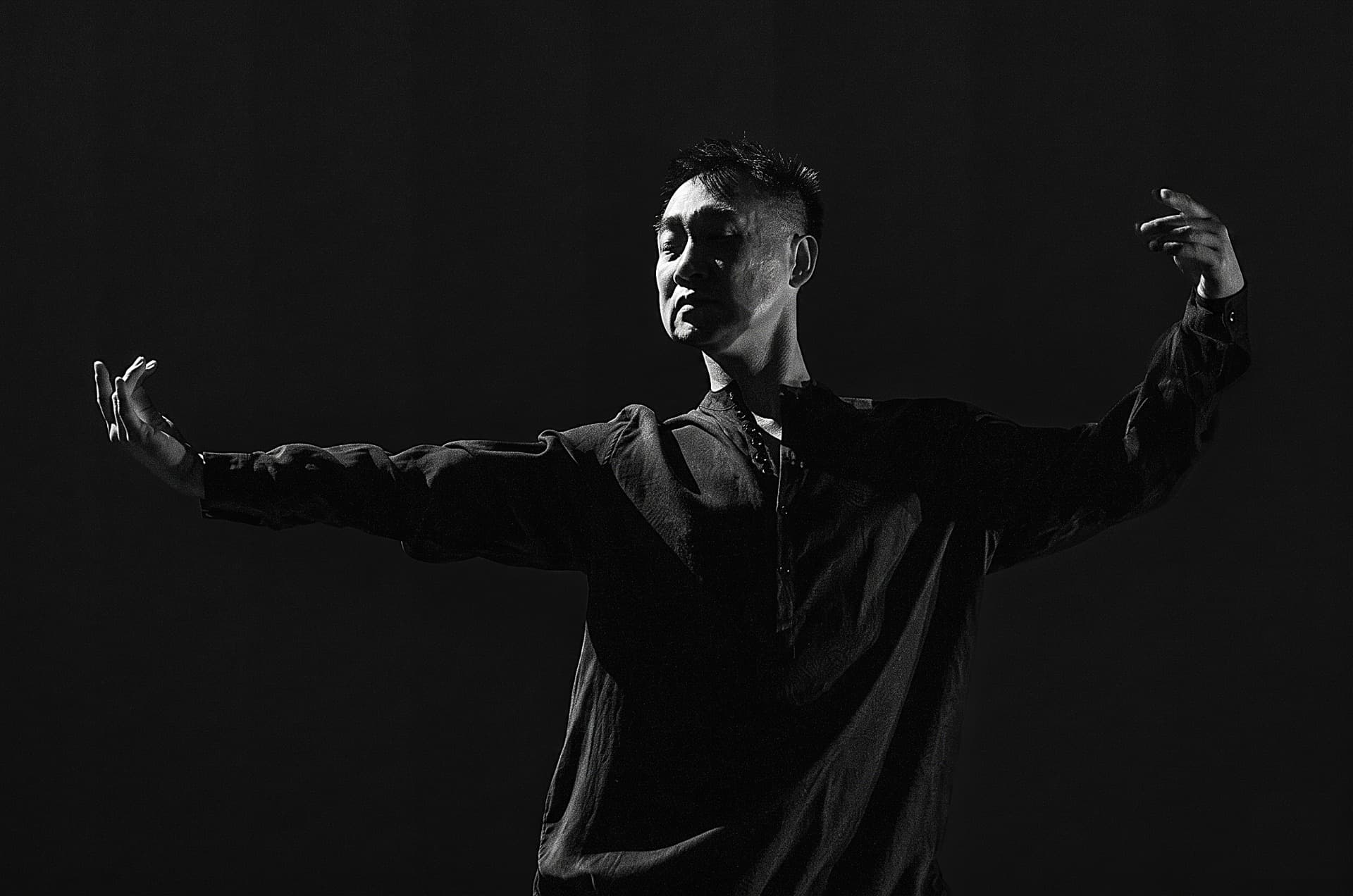
It is a little after seven on a weekday evening, and you have not quite left the office behind. The bus down Beach Road, the lift, the corridor — and somewhere in all of that your shoulders are still up around your ears, your head still running the day's spreadsheet in the background. You push open the studio door at 47 Beach Road. There is warm light, a wooden floor, and a wall of mirror you were half dreading. Someone smiles at you. The music has not started yet. You take one breath before it does.
If you have read this far, you probably already know the feeling I am describing — the quiet ache of having wanted to dance for a long time. Maybe you watched a 古典舞 solo years ago and thought, one day. Maybe you did ballet as a child and let it lapse, and it has been calling you back ever since. Maybe you simply suspect there is a more graceful version of you waiting inside a body that mostly sits in meetings. And every time the thought surfaces, a second voice answers it: too late.
This is not a pitch. It is permission. Let us take that phrase — "too late" — apart, gently, and see whether it belongs to you at all.
The real question isn't your age — it's who told you it was too late
Think about where the idea comes from. The images we carry of "a dancer" are almost all of children: the six-year-old at the barre, the teenager already turning clean pirouettes, the prodigy whose training began before they could spell the word. Add to that the world of professional companies and competition circuits, where a career really is a race against the calendar — where an audition panel is, in fact, counting years.
That is a real world. It is simply not your world.
There is a difference between starting a career and starting to dance, and almost everything you have absorbed about being "too late" was written for the first. A professional path is age-sensitive because it asks the body to peak, compete, and perform at a commercial standard within a narrow window. Dancing to feel alive asks nothing of the kind. It has no audition panel. It is not counting. The deadline you are afraid of was set for someone whose life looks nothing like yours — and you have been holding yourself to it by mistake.
So the honest question was never "am I too old?" It was "who decided this was closed to me, and were they even talking to me?"
"I'm too old" — what an adult body can actually do
Here is something the child-prodigy image hides: adults do not learn movement worse than children. They learn it differently.
A child mostly absorbs by imitation and repetition — a slow, unconscious soaking-up over years. An adult brings a different set of tools to the same mirror. You can follow a spoken instruction. You can watch a phrase once and understand the shape of what is being asked. You can feel that your own arm is a few degrees off and correct it without being told twice. You understand intent — why the head turns before the hand, why a movement breathes rather than snaps. Where a child gets there through time, you get there through attention.
The advantage of a thinking body
That thinking quality turns out to be a real gift in the forms our adult students are most drawn to. Chinese classical dance (古典舞) and folk dance (民族舞) are not simply sequences of steps; they carry mood, story, and a whole cultural sensibility in the tilt of a wrist or the weight of a gaze. Wanting to get that right, for reasons deeper than the counts, is something a lived-in adult does naturally. Patience, focus, an eye for artistry: these are not consolation prizes for starting late. They are advantages you have earned.
And the body itself responds. Regular, mindful movement tends to support the everyday things we quietly lose track of — mobility, balance, the posture that a decade of desks slowly folds inward. We will not dress that up as a medical prescription; think of it instead as the lived experience many adults describe after a few months of dancing: standing a little taller, moving a little easier, sleeping a little better. Motor-skill research increasingly finds that the adult brain stays capable of learning new physical patterns well into later life.
"I'm too stiff. I have no rhythm."
Almost everyone says one of these in the first week. Here is the reassuring truth behind both: flexibility and rhythm are trained, not inherited. The dancer you admire was not born loose-limbed and metronome-perfect — they were trained into it, slowly, the same way you will be. Every single person in that room started tight.
The mirror, which you dreaded on the way in, is part of how this works — and it is a tool, not a judge. It is there so that you can see the gap between what you are doing and what you are reaching for, and close it a little each week. It is not there to grade your face or your figure. After a class or two, you stop seeing yourself in it at all and start seeing only the movement.
This is also where a studio's teaching actually matters. Classes at YUE are paced for genuine beginners — the warm-up prepares stiff, office-bound bodies rather than assuming a dancer's range, and a phrase is broken down slowly enough that "I can't" quietly becomes "not yet." You are not dropped into a room of people who already know. You are met where you are.
"I'll embarrass myself"
This is the fear that keeps the most people standing outside the door, so let us be plain about it. Look around a beginner class and you will notice something freeing: everyone is far too busy with their own arms to be watching yours. The self-consciousness you carry — they have it too, pointed at themselves. The room is not an audience. It is a group of people quietly forgiving their own mistakes, which makes it one of the easiest rooms in the world to make mistakes in.
YUE is non-competitive by design. The point is not to be the best in the room; it is to be a little freer than you were last week. And if you would rather hear that from people who once stood exactly where you are now, our students say it better than we can — read a few of their voices.
"I'm too busy" — the hour that gives time back
Time is the most honest objection on this list, and the answer is a small reframe. A class is ninety minutes with your phone in your bag. For those ninety minutes there is no inbox, no group chat, no half-finished tab open in your head — there is only the count, the music, and the next movement. People arrive frayed from work and leave lighter, and it is not magic; it is simply what happens when a busy mind is given one physical thing to hold and permitted to drop everything else. In that sense the hour does not cost you time. It gives some back.
Practically, it is built to fit a working life. Classes run in the evenings and on weekends, so you can come straight from the office or fold one into a Saturday — have a look at what lands on your week on the schedule. And you do not have to commit to a term to begin. A single trial class is $38 for 1.5 hours — low enough to say yes to on a whim, which is often exactly how the best things start. The smaller practical questions, like what to wear and how to pay, live on the FAQ.
What a first class at YUE actually feels like
Since fear lives in the unknown, here is the shape of it.
You arrive a few minutes early, change, and find a spot on the floor — not front and centre unless you want it. The class opens with a warm-up that eases the neck, spine, and ankles awake; nothing you cannot do. The teacher introduces a short phrase and breaks it into pieces, and for a while you feel behind, and that is normal. Then somewhere around the third or fourth pass, the pieces link. Your body does the thing before your mind has finished narrating it. That small click — the first time a movement arrives on its own — is the reason people come back.
Which form should that first class be? Follow whatever drew you here. If it was flowing lines and quiet inner poise, that is Chinese classical dance; if it was colour and character, folk dance; if it was line and elegance at a barre, our adult ballet is built for beginners and returning dancers — with contemporary and the broader 华族舞 tradition besides. You are not choosing forever, only where to start.
It helps to know who is standing at the front. YUE's instructors are not teaching adults as an afterthought — several have done exactly this for decades. Our adult ballet is led by a teacher who has spent years patiently guiding adult learners of every background toward the line and ease at the heart of ballet, and our classical and folk classes are taught by artists with full professional and academy careers behind them. You can meet them on the instructors page.
The bigger picture — only if you want it
For most people the pleasure of the class is the whole point, and that is complete in itself — but it is worth knowing what the door quietly opens onto, in case you ever want it.
There is a community, and there is a stage. Each year the studio mounts its recital, 悦舞飞扬 — YUE Dance Rising — a chance to bring a piece into the light. Since 2018, YUE's dancers and choreography have also appeared on some genuinely serious stages: the Chingay Parade, in a performance later featured in the Straits Times; River Hong Bao, where the studio took a Best Live Performance Award; a Gold Award at the Singapore Golden Lion Cup; charity concerts and community galas across the island. It is a real level, held by a school that still teaches complete beginners — proof that starting quietly and standing on a stage are not two different worlds, just two ends of the same one. You can see where it has all gone on the performances page. None of it is an expectation. It is simply a set of doors that turn out to be unlocked.
Come see for yourself
Picture the same weekday evening again, but from the other side of the ninety minutes. The music has stopped. Your shoulders came down from around your ears somewhere in the middle and you did not notice when. The spreadsheet is still there, waiting, but it has lost its grip on you. You are a little warm, a little tired in the good way, and — there is no other word for it — a little more alive.
That is what was waiting on the other side of "too late": the simple, unhurried chance to find the beauty in life through dance. You do not have to decide anything today except to try one class. Any style, $38 for 1.5 hours, no term to commit to — come see for yourself. When you are ready, say hello, and we will find you a class to begin in.
Come find the beauty in dance
Any class, $38 for a 1.5-hour session. Come see how it feels.
Book a Trial