

Too Stiff to Dance? A Beginner’s Guide to Safe Stretching & Flexibility for Adults
29 May 2026
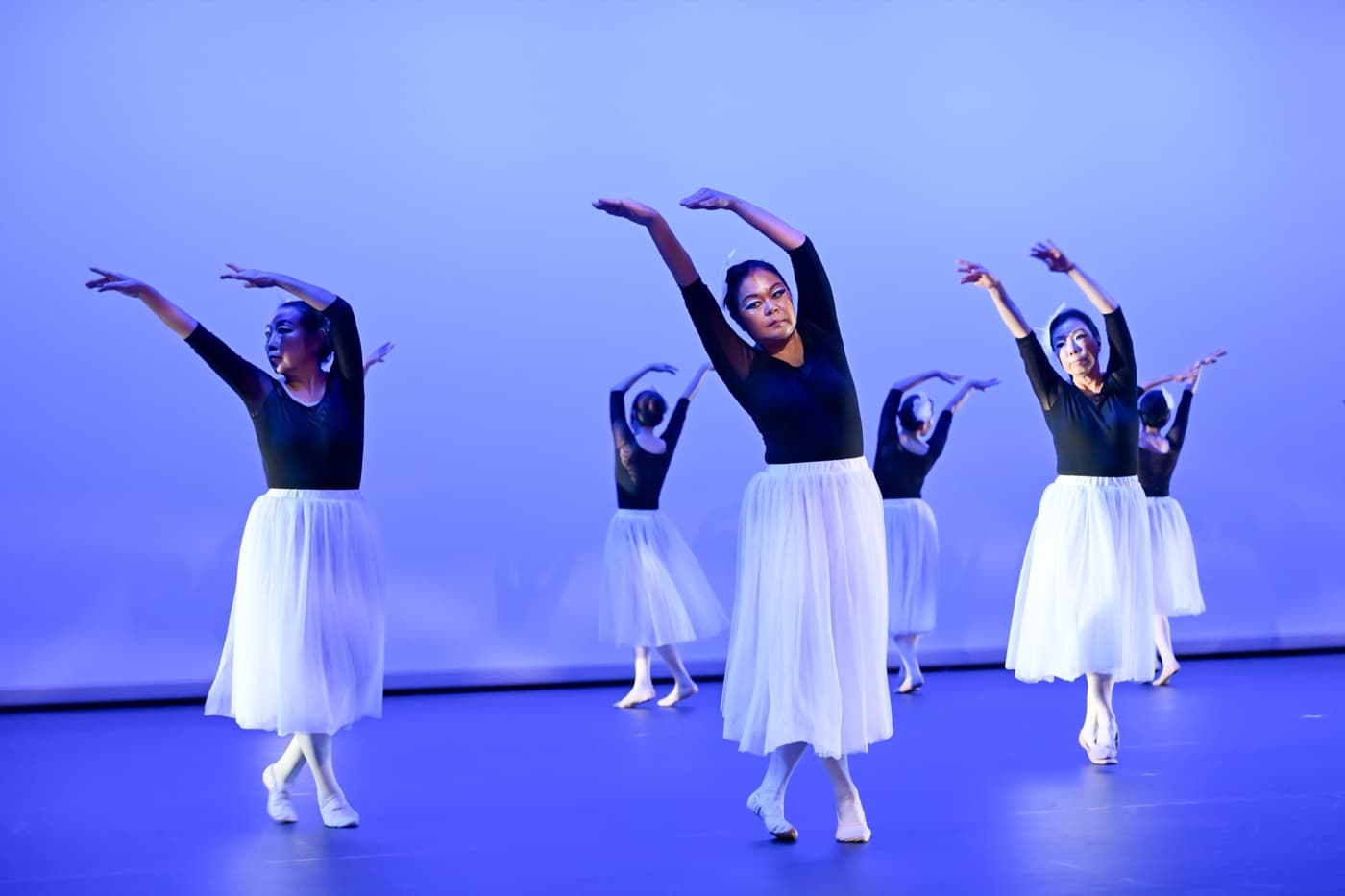
You sit on the floor one evening, legs stretched out in front of you, and reach for your toes the way you did easily as a child. Your fingertips stop somewhere around mid-shin. A quiet, faintly sinking feeling comes with it — the sense that somewhere along the years of desks, commutes, and screens, a window closed. You conclude, almost automatically, that your body simply isn't built for dance anymore, that the graceful lines you admire belong to people born bendy, and you missed your chance.
Nearly every adult who walks into a studio for the first time feels exactly this. And it is worth saying plainly, before anything else: stiffness is a starting point, not a verdict. Flexibility is not a gift handed out at birth to a lucky few — it is a skill your body learns, slowly and safely, at any age. The people who improve are rarely the naturally supple ones; they are the consistent ones. What follows is a calm, realistic framework for beginning — not a contortionist's regimen.
The myth: "I have to be flexible before I can start"
This belief keeps the most people standing outside the door, and it has the logic exactly backwards. Flexibility is not the entry ticket to dance — it is one of the things dancing gives you. Nobody stretches for years in private and then, once qualified, arrives at a first class. You get more flexible by dancing, supported by sensible stretching along the way.
Adult beginners arrive stiff — that is the norm, not the exception. A room of new students on the first evening of term is full of people who cannot touch their toes, whose hips feel locked, whose shoulders sit up around their ears after a day at the keyboard. Good instructors are not surprised by this; they expect it, and build every class to meet bodies exactly where they are. The barre, the warm-up, the slow repetition of a simple phrase — these exist precisely so that a stiff, out-of-practice body can begin. You are at the beginning, which is where beginning is supposed to happen.
How flexibility actually improves
Two plain ideas are worth holding in mind, because they explain why patience works better than force.
The first is that a great deal of your current range is governed by your nervous system, not just the length of your muscles. When a position feels unfamiliar or unsafe, your body instinctively guards against it, tightening to protect you. As a movement becomes familiar through gentle, repeated practice, that guarding eases and your body begins to allow more range. Much of a beginner's early progress is simply the body learning that a new position is safe.
The second is that tissues adapt to what you ask of them — gradually, when you ask kindly and often. The key words are consistent and gentle: this is slow work, and it does not respond to bullying.
Which leads to the single most useful principle in this entire guide: consistency beats intensity. Ten unhurried minutes several times a week will change your body far more than one punishing session that leaves you too sore to move. It is a long, patient conversation with your body, not an argument you win in a single evening.
Dynamic vs static stretching: when to use each
Not all stretching does the same job, and a common beginner mistake is using the wrong kind at the wrong time. The simple version to remember: dynamic to prepare, static to develop.
Before class: dynamic
Before you dance, your body needs to be warm and awake, not lengthened to its limit. This is the moment for dynamic movement — controlled, flowing motions that take your joints gently through their range and raise your temperature: easy leg swings, ankle circles, rolling the shoulders, rotating through the torso, marching, gentle arm sweeps. Long, deep static holds on a cold body are not the goal here. The aim before class is simply to prime the body for movement.
After class, or in a dedicated session: static
Once you are thoroughly warm — after class, or during a session of your own that begins with a warm-up — is the time for static stretching: easing into a comfortable position and holding it, breathing steadily, letting the body settle. This is where developing range lives: ease in rather than lunging, and let each exhale invite a little more openness without ever chasing pain. Warm muscles are far more willing than cold ones, which is exactly why this work belongs at the end.
The areas dancers care about (and why)
You do not need to master a checklist of exercises to understand where dance asks for openness. Think of this as a gentle tour, not a prescription — and every one of these areas is trainable over time.
- Hips. So much of dance — turnout, extensions, the ease of a leg lifting — lives here. Hips tend to feel tight in adults who sit for a living, and they respond well to patient, regular attention.
- Hamstrings. The muscles behind the classic "I can't reach my toes." They shape your lines and support forward folds and lifts — and for most desk-bound adults, they are the first place progress becomes visible and encouraging.
- Ankles and feet. Often overlooked, quietly essential — pointing, balance, and the fine articulation that makes footwork look effortless all depend on mobile, strong ankles and feet.
- Spine and back. The curves of Chinese classical dance, the carriage of ballet, the expressive upper body of contemporary work all ask something of the spine. Treat this area especially gently; it rewards care.
- Shoulders. Open, easy shoulders give you graceful port de bras, an unhunched carriage, and the quiet elegance of a well-held upper body — a welcome antidote to the desk-worker's slump.
A simple, realistic weekly approach
Little and often beats one heroic session. A workable rhythm for a busy adult looks less like a training camp and more like brushing your teeth: short, regular, and reliable.
- Always warm up first. Stretching a cold body is the fastest route to discomfort and strain.
- Work into ranges gradually. Move to the edge of a comfortable stretch, not past it. There is no prize for the deepest position.
- Never bounce or force. Steady and still, not jerky and forced. Bouncing into a stretch works against you.
- Pair stretching with class. The stretching supports the dancing; the dancing gives the stretching a purpose. Together they compound.
- Let rest count. Recovery is not time off from progress — it is part of it. Bodies adapt while they rest.
Attending class regularly does much of this for you automatically: a well-run class is built around a proper warm-up and a sensible arc from gentle to fuller movement.
A sample gentle routine, in principle
Here is the shape of a sensible session rather than a rep-by-rep prescription — a template to adapt, not a rule to obey. Think of it in three unhurried movements.
Begin with a short dynamic warm-up: a few minutes of easy, flowing motion to raise your temperature and wake the joints — swings, circles, rolls, gentle rotations. Then, once you are genuinely warm, move into a handful of well-supported static stretches for the areas above — comfortable positions, held with steady breathing, easing a fraction deeper on the exhale and always stopping well short of pain. Then come out gently and let the body settle.
That is deliberately vague on exact hold times and angles, and it should be: the right numbers depend on your body, your day, and how you feel. That is exactly the judgement an instructor makes with you in the room — adjusting a position so the stretch fits you, not an idealised diagram. Our instructors do this in every class.
Safety and red flags
This section matters more than any other, so read it slowly.
Warm up before you stretch. Move into every position gradually. A mild, general sense of stretch — a comfortable tension through the belly of a muscle — is normal and fine. What is not normal is sharp, shooting, or stabbing pain; pain located in a joint rather than in the muscle; numbness or tingling; swelling; or pain that lingers well after you stop. Those are signals to ease off, not to push through.
Kill the old idea of "no pain, no gain." In stretching, pain is not a sign of progress — it is a stop signal. Never force a position, never bounce into one, and never try to power through pain in the belief that you are toughening up. You are not. You are inviting injury.
This article is general educational guidance, not medical advice. If you have pain, a current or past injury, or any medical condition, please consult a doctor or a physiotherapist before beginning a new stretching or dance practice. A qualified professional can tell you what is right for your individual body — no article can.
Realistic timelines
Let us be honest, because honesty is kinder than hype. Meaningful change in flexibility is usually measured in weeks and months, not days, and it varies genuinely from person to person — depending on where you start, how your body is built, and above all how consistent you are. Anyone promising you the splits in thirty days is selling something.
So recalibrate what a win looks like: fingertips that reach past mid-shin when they used to stop short; a hip that opens a little more easily than last month; a shoulder that no longer complains when you raise your arms overhead. These are real victories — the ones that accumulate into the graceful lines you admired at the start, and the proof that the window never closed.
You are not too stiff — you are at the beginning
The fingertips that stopped at mid-shin were never evidence of a door that had shut — only an honest measurement of where you are today, and today is a perfectly fine place to begin. Stiffness is the shared starting line of almost every adult dancer you will ever meet, including the ones now moving beautifully across the floor. You can read a few of their stories in our students' voices.
When you are ready, come and try one class — any style, $38 for a 1.5-hour session. Bring your stiffness; that is exactly what a first class is for. Our instructors will guide your warm-up and meet your body where it is today. Browse the courses and the weekly schedule, and when it feels right, get in touch. The beginning is a fine place to be.
Come find the beauty in dance
Any class, $38 for a 1.5-hour session. Come see how it feels.
Book a Trial