

What Progress Really Looks Like as an Adult Dancer
17 April 2026
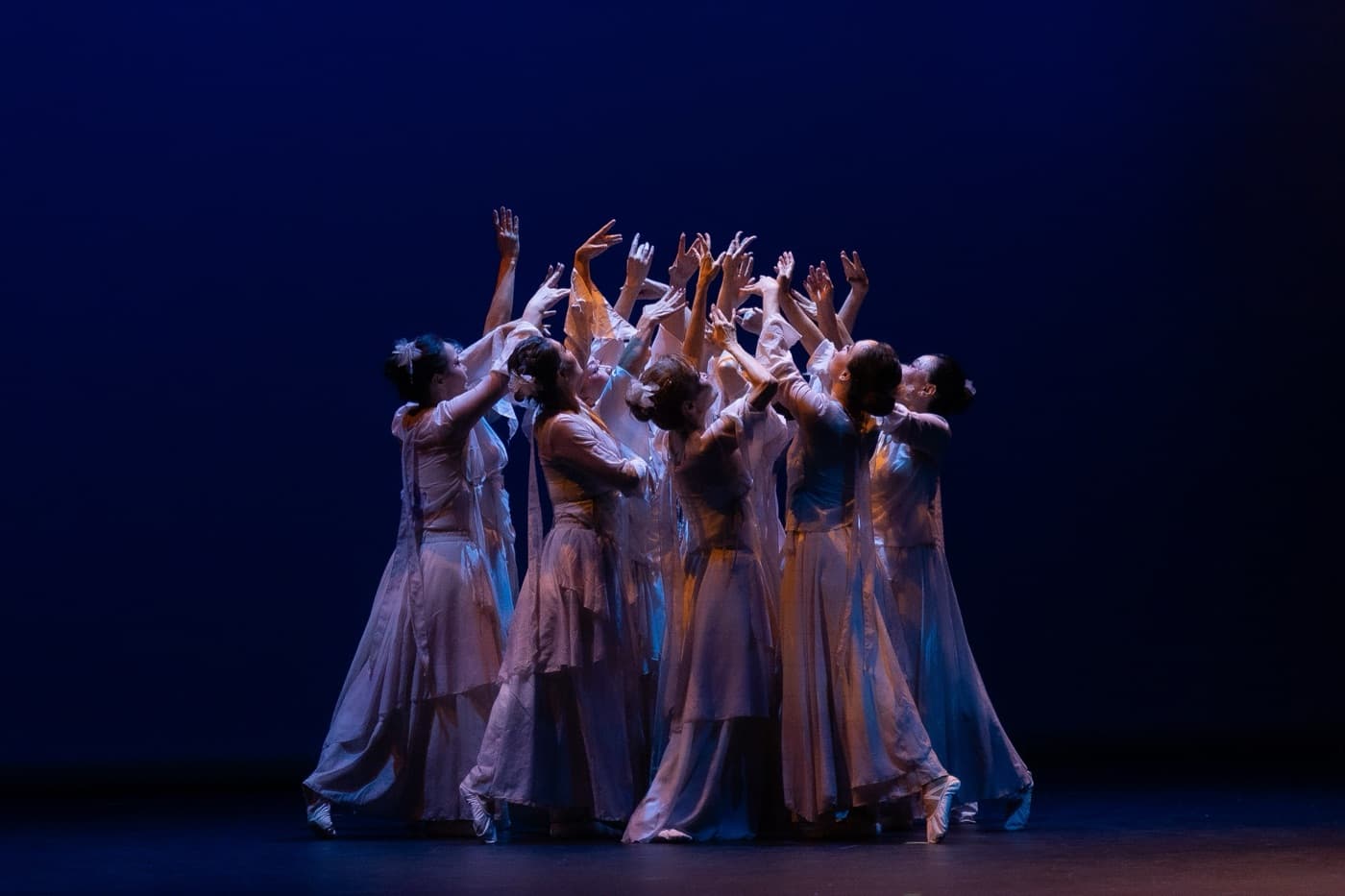
You already know how it is supposed to look. Long before your first class, you had rehearsed the whole thing somewhere behind your eyes: the music rises, your arms find the line without being asked, your feet land where they should, and you move the way the dancer in the video moved — the one you watched fourteen times. Then the real thing arrives. It is week three. The mirror in front of you shows someone half a beat late, lips moving to a silent count, one shoulder drifting quietly up toward an ear. The dancer in your head and the dancer in the glass have, it seems, never met.
Here is the first true thing about learning dance as an adult: that gap is not evidence that you were wrong to start. It is the most ordinary sight in the room. Everyone who has ever learned to move well once stood exactly where you are standing, feeling exactly that distance. The difference between the ones who keep dancing and the ones who quietly stop is rarely talent. It is what they believe the gap means.
Progress rarely moves in a straight line
We imagine improvement as a clean upward slope — a little better every week, effort in, reward out, tidy and fair. Real adult dance progress is nothing so obliging. It arrives in steps and stalls. You will have a week where something you struggled with suddenly feels easy, and then three weeks where you seem to get worse at it before it settles. You will hit plateaus that feel like walls — stretches of time where the effort is the same and the visible reward is nothing at all.
And then there is the awkward middle: that strange, uncomfortable phase after the beginner's forgiveness has worn off but before the movement has become yours. You know enough now to see your own mistakes, but not yet enough to fix them in the moment. It is the least glamorous part of learning, and it is also, quietly, where most of the real growth happens. The plateau is not the absence of progress. It is very often the body consolidating in the dark, building something underneath the surface that has not yet shown itself.
Then comes the day a step finally clicks. A turn you have muddled through for a month simply works, cleanly, almost without you. A sequence your feet fought suddenly runs on its own while your mind is elsewhere. Those days do not arrive on schedule, and you cannot force them — but they come only to people who kept showing up through the flat stretch that came before.
How long does it take to learn to dance as an adult?
This is the honest answer, and it is not the satisfying one: it depends, and there is no number worth trusting. Anyone who promises you the splits in thirty days, or "fluency" by a fixed date, is selling you a timeline rather than teaching you to dance.
What is truer is that progress in adult learning tends to be shaped less like a countdown and more like a series of quiet thresholds. There is the point where you stop feeling lost in the warm-up. The point where a short phrase lives in your body well enough that you are no longer chasing the count. The point where you can watch, absorb, and roughly reproduce a new sequence within the same class, rather than taking it home in pieces. These come at different times for different people, shaped by how often you practise, your starting point, and the simple grace of an unhurried teacher.
Adults, for what it is worth, are not slow learners — only different ones, and often more deliberate ones. You bring focus, patience, and a mind that wants to understand why a movement works, which is its own quiet advantage, especially in forms as detailed as classical Chinese dance or ballet. The trade is only this: the reward is measured in months and seasons, not days. Make peace with that arithmetic early, and everything after it gets easier.
Consistency quietly beats talent
If there is a single thing that separates the adults who bloom from the ones who drift away, it is not flexibility, not rhythm, not some gift they were handed at birth. It is that they came back. One class, most weeks, for long enough that the weeks turned into a season.
Talent is a fast start. Consistency is a long finish, and dance rewards the finish. The naturally coordinated beginner who comes once a month will, within a year, be overtaken by the "stiff" one who comes every week without fail. The body learns by repetition and return — by meeting the same movement again and again until it stops being a task and becomes a habit the muscles keep on their own. This is the great equaliser of adult learning, and it is entirely within your control. You cannot choose your natural aptitude. You can choose to protect one slot in your week. Picking a class time you can actually keep — an evening on the way home, a fixed hour on the weekend — matters far more than picking the "right" style. You can see what fits your week on the schedule.
The small wins that actually count
Part of what makes progress feel invisible is that we look for it in the wrong place. We want the whole dance to be beautiful, and when it is not, we conclude that nothing has changed. But growth in dance almost never arrives all at once. It accumulates in small, specific, easily missed wins:
- A line that is a little cleaner — an arm that finishes where it should, a wrist that is no longer an afterthought.
- A phrase you have finally memorised, so your mind is free to feel the music instead of bracing for the next count.
- Less breathless at the end of a sequence that used to leave you gasping.
- More ease — the same movement done with less clench, less effort, more breath.
- Standing a little taller off the floor, in the queue, at your desk, without deciding to.
None of these will make a stranger gasp. All of them are progress, and they are the honest currency of it. The polished performance you pictured is only ever the sum of a hundred of these small, unglamorous refinements, stacked patiently on top of one another.
Learning to notice — and mark — your own progress
Because the wins are small, you have to train yourself to see them, or the plateaus will convince you nothing is happening. A few gentle habits help.
Measure against your own past, never against the person at the front of the room. The only fair comparison is you, three months ago. Notice the things that used to be hard and are now merely normal — a warm-up that no longer wrecks you, a turn you no longer dread. Let your teacher be a mirror for this; a good instructor will name the specific thing you did better today, and it is worth actually hearing it. At YUE, that unhurried, one-at-a-time attention is the method, not an accident — our instructors are drawn to teaching adults precisely because they like watching people grow at their own pace. And once in a while, read what other adults who started where you are have written about their own arc, over on voices. It is steadying to be reminded that the awkward middle is a place everyone passes through, not a place anyone lives.
The long, quiet reward of learning as an adult
There is a particular kind of satisfaction available only to the adult learner — one the child prodigy, handed skill early, never quite tastes. You know exactly what it cost. You remember the week you could not find the count, and now the count finds you. Progress you earned slowly, as a busy adult with a hundred other claims on your hours, belongs to you in a way that easy gifts never do.
And the arc is longer than a single term. Season by season, the movements you once had to think about become the ground you stand on, and new, harder, more beautiful things become possible on top of them. Some of our dancers arrive with no intention beyond a little movement after work, and find themselves, a couple of years on, stepping onto a real stage in our annual recital, YUE Dance Rising 《悦舞飞扬》 — not because anyone required it of them, but because the door simply opened and, this time, they were ready to walk through. That is what the long arc offers: not a finish line, but a slowly widening room.
Take the next step — however small
If you have not started yet, the honest truth is that the dancer in your head will always be a little ahead of the dancer in the glass — and that is exactly the tension that keeps this worth doing. The gap does not close because you become perfect. It closes because you fall a little in love with the closing of it.
So begin, or begin again. If you are weighing which door to walk through, the styles we teach — Chinese classical, folk, ballet, contemporary — are all taught for adult beginners and returning dancers, at a human pace. New here? You can try any class for $38, a full 1.5-hour session — one honest hour and a half to feel, from the inside, what week three and week thirty could hold. When you are ready, say hello and book a trial. Come as you are today. The progress starts the moment you do.
Come find the beauty in dance
Any class, $38 for a 1.5-hour session. Come see how it feels.
Book a Trial