

Why Culturally Curious Adults Choose Chinese Dance
13 March 2026
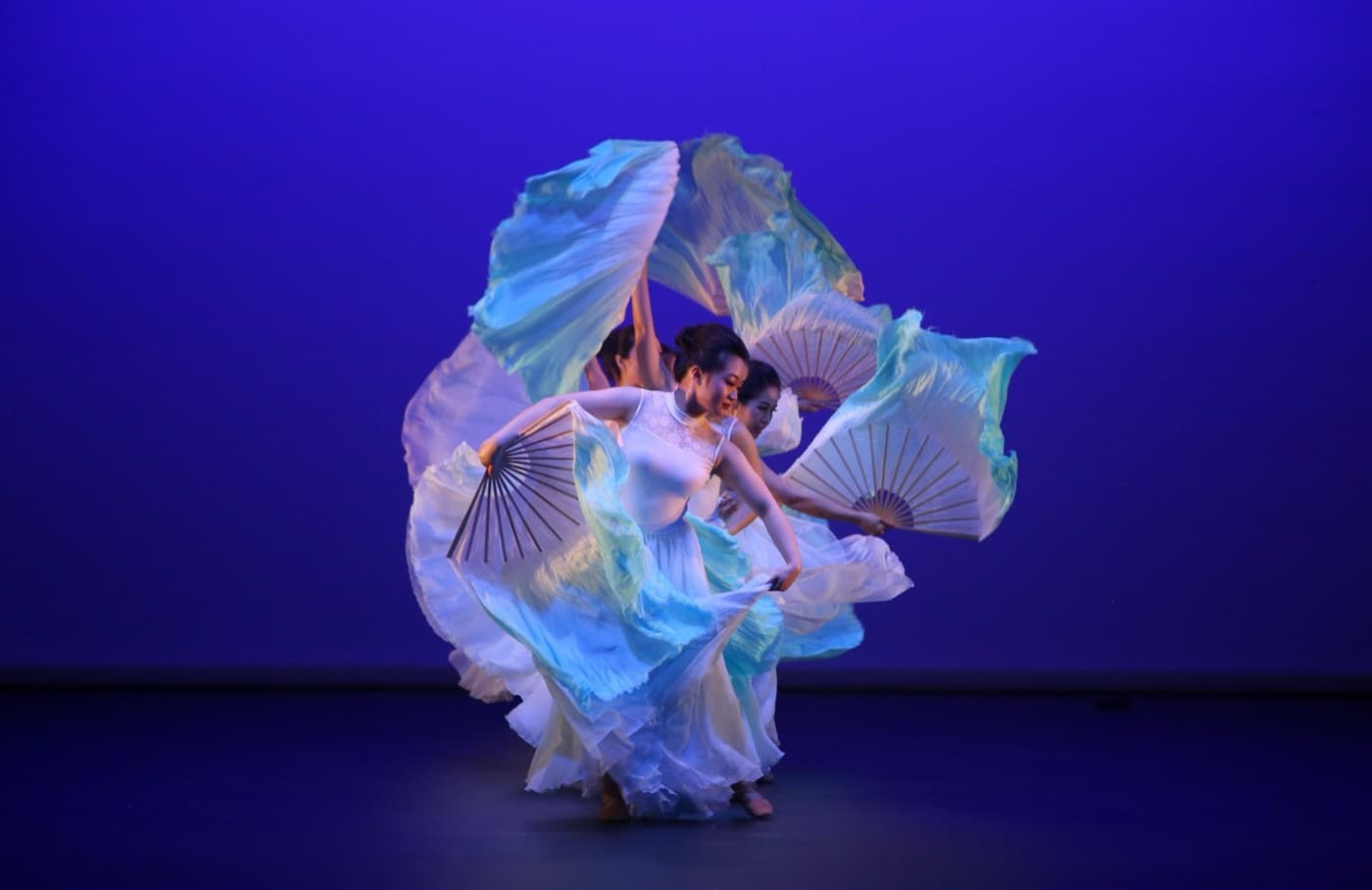
You have probably tried the gym, or yoga, or a few weeks of spin. They leave you a little lighter and give the day's tension somewhere to go. But most people know the particular flatness of finishing a workout, wiping off the sweat, and feeling that the hour left nothing behind worth keeping.
So some of us go looking for a different kind of movement — one that does not just burn calories, but lets the body remember something, and say something. For many adults in Singapore, that search ends at Chinese dance. The reason they sign up is rarely "to lose weight." It is closer to a quiet pull: toward roots, and toward the part of themselves that wants movement to carry meaning.
This is for anyone still hesitating — a look at why, with so many ways to stay fit, so many grown adults choose to learn Chinese dance in particular.
More than a sweat: what Chinese dance offers
A gym treats the body as equipment to be honed: stronger, leaner, more durable. That has real worth. Chinese dance asks a different question — now that you have this body, what do you want to say with it?
A class will still leave you stretched, warm, and pleasantly sore. But alongside that, it trains things equipment cannot: the pairing of breath with movement, the giving and gathering of weight, where a glance lands, how a feeling rises and settles. It asks for focus and sensitivity, not only effort — and what it returns is not just a cleaner line, but a poise and ease other people notice right away.
None of this is set against fitness. Plenty of our adult students keep running or lifting on the side; ballet, contemporary and Chinese dance sit in the same studio and feed one another. The difference is the motive. Do you want a better body, or a body that can express and tell? The people who choose Chinese dance usually want the second.
Heritage you practise, not inherit
For many Chinese-Singaporean adults, culture can feel abstract. Dialect thins with each generation, festivals shrink toward a day off, and the question of who you are starts to read like a form with blanks.
Chinese dance is one of the few ways to touch that culture with the body rather than the intellect. You are not reading tradition in a book; you are working it, repetition by repetition, into muscle and breath. The softness of a Dai-ethnic phrase, the grounded sway of a Tibetan one, the arc a silk sleeve draws through the air — these are not facts to memorise but memories you make with your own hands.
Heritage was never a bloodline you inherit passively. It is something you do — you practise it, you dance it, and each generation adds a layer of its own.
Worth saying plainly, too: Chinese dance in Singapore has a character of its own. It was not simply imported from elsewhere; it is something local dancers have shaped over decades on this multicultural ground, with its own Nanyang inflection. Walk into class and you take up not only an old art but a living local story unfolding right beside you.
Classical dance: the inward beauty of line and 身韵
If you have ever been moved by the quiet, contained power of a dancer on stage, it was probably classical dance.
One common misconception is worth clearing up first: what we call Chinese classical dance today is not a set of ancient steps passed down unchanged. It is a body of work that dancers built through the twentieth century, drawing movement from Chinese opera and martial arts and refining it through systematic training. It is young, and rooted in something very old.
Its heart is 身韵 (shen yun) — the marriage of movement and inner rhythm: rise and sink, the round and the coiled, the principle of conveying spirit through form. A turn should be round; a closing gesture should leave something lingering. A silk sleeve flung out and gathered back; the give-and-take of hard and soft in a sword dance — the beauty it offers is a beauty of line, and of restraint. At YUE, Chinese classical dance is taught by Angel Peng, a graduate of the Shenyang Music Conservatory's dance department with over a decade of teaching behind her. For an adult, classical dance may be slow to show results — it tests control and breath more than anything — but few things cultivate poise so surely.
Folk dance: the outward character of a place
If classical dance turns inward, folk dance opens outward.
China's many ethnic groups each carry a way of life in their dance. There is water and stillness in Dai movement — the source of our own stage piece 《傣家竹雨情》; the trembling knees and long sleeves of Tibetan dance hold the height and devotion of the plateau, as in 《藏音》; the firm shoulders and riding stance of Mongolian dance carry the openness of the grassland. These signature movements are never decoration — they are a distillation of how a people work, celebrate and live.
Folk dance at YUE is taught by Bai Ying Wen, a graduate of the Folk Dance Department at the Beijing Dance Academy. His classes run on laughter, and what he does best is teach a step while making clear whose land and life it came from. For adult beginners, folk dance is forgiving, rhythmic and quick to pick up — a natural first step into Chinese dance.
A body that tells stories
This may be the deepest difference between Chinese dance and pure fitness. Here, a movement is never only a movement. Where a glance lands, a turn half-taken and withdrawn, the fall of a sleeve — each one is telling something: a private feeling, a character, a mood. It is an art of conveying spirit through form; the body is the medium, the story is the content. You are not drilling a set of reps toward boredom but learning a language that can narrate. That cultural depth is why so many adults find, after a while, that they have gained far more than a better posture — they have gained a way of being seen.
Belonging in a multicultural Singapore — and yes, you are welcome
Chinese dance is not Singapore's only tradition, and certainly not its highest. It is one voice in a plural city — beside Malay and Indian dance, not above them.
Which is exactly why dancing it becomes a matter of belonging. Over the years we have had the privilege of taking part in shared celebrations like the Chingay Parade and River Hong Bao — less as performers than as participants in a civic ritual the whole island shares. The people dancing beside you are ordinary adults of every age and trade, and a studio slowly becomes a community they have chosen.
And the door has never been open only to Chinese Singaporeans. You do not need Chinese heritage to dance this art. It belongs to anyone it moves. YUE's Chinese dance is taught jointly by artistic director Daniel Deng Yu and Chang Hsiao-Min, a Taiwan-born instructor known for fusing Eastern and Western movement — proof in itself that beauty crosses borders. If you are simply drawn to the line and breath of it, wherever you come from, there is a place for you here.
Beginning, at any age
You need no childhood training, no cultural "credential," no natural flexibility. The adults who choose Chinese dance include complete beginners, dancers returning after years away, and people who were simply stopped in their tracks one day by a single dance. Our instructors are used to starting from the body in front of them, not from an idealised diagram.
If any line here landed, come and feel it for yourself. Take any class — classical, folk, or the broader Chinese dance course — for $38 for a 1.5-hour session. Read a few students' voices if you want their stories first; meet the teachers on the instructors page; see where we have danced under performances. When you are ready, get in touch, or browse the courses and weekly schedule.
To find the beauty in life through dance — Chinese dance may just be the path that leads you back to yourself.
Come find the beauty in dance
Any class, $38 for a 1.5-hour session. Come see how it feels.
Book a Trial